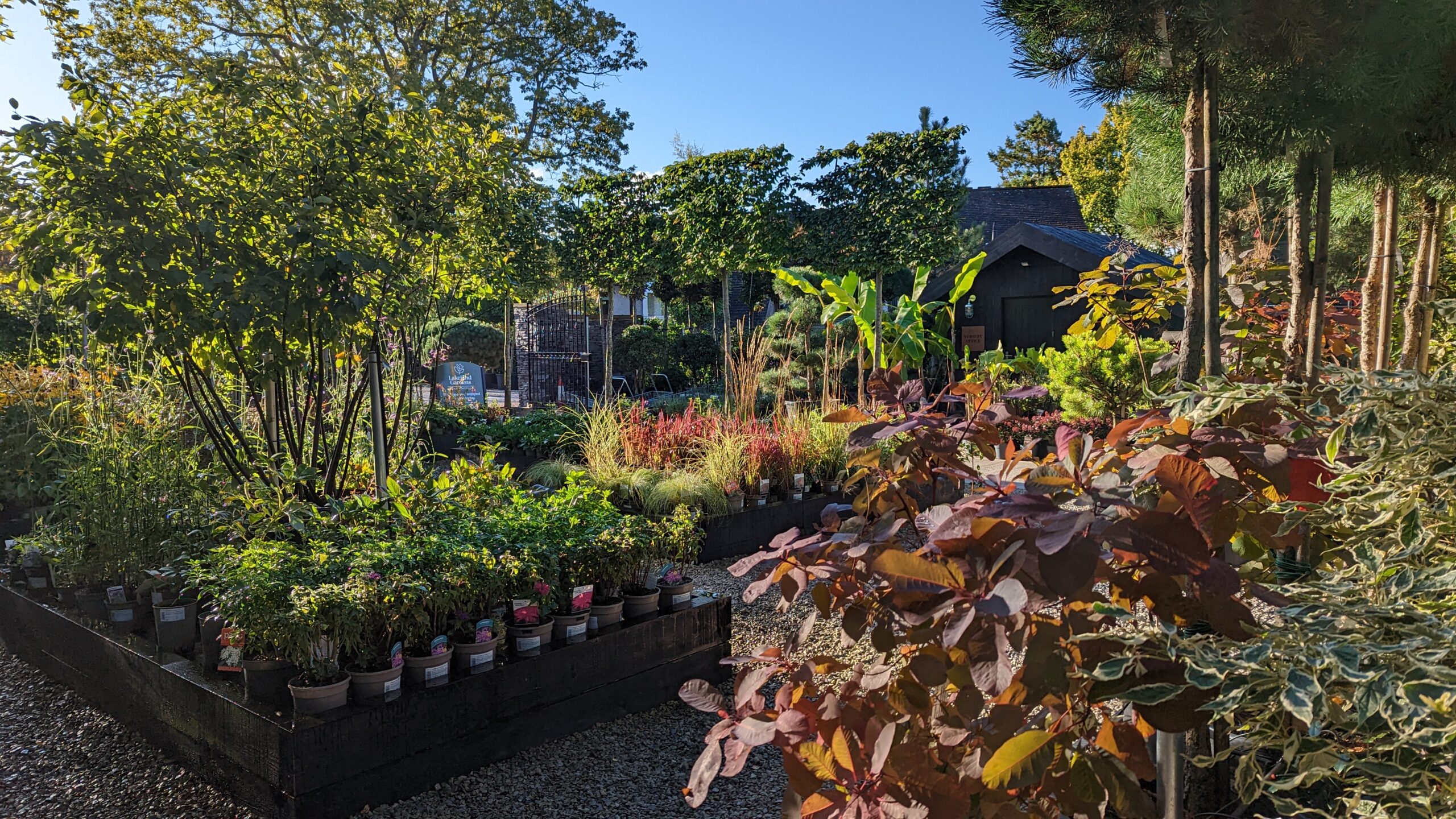
You would be forgiven for thinking that a tree is a tree, and usually looks something like a stem of broccoli. But here at Lakeland Gardens we offer a huge range of trees in all different shapes and sizes. The way a tree is pruned can have a great effect on its formality and its use.
Here we look at the different forms and shapes that a tree can take…
Standard
With a crown teetering atop a clear, straight stem, the standard tree comes in several sizes; ¼, ½ or full. The smaller versions work well either side of a door or a gateway, and can create a smart entrance to a formal garden area. The taller versions look spectacular lined up as an avenue, raising their grand heads above a hedge or simply taking centre stage as a specimen tree.
Standard trees can appear more formal in the form of clipped holly or bay, or less formal in the form of hornbeam or birch.
Box head
The box head tree looks much like a standard, with a towering, straight trunk topped with a cuboid shape. These can look striking used in a row to form a smart, porous barrier.
Rooftop
Very much like a boxhead, but flattened to form a fabulous natural parasol, allowing dappled light to dance on the ground below. A collection of four can create a perfect patio shade, or six for a shaded walkway or natural veranda.
Pleached
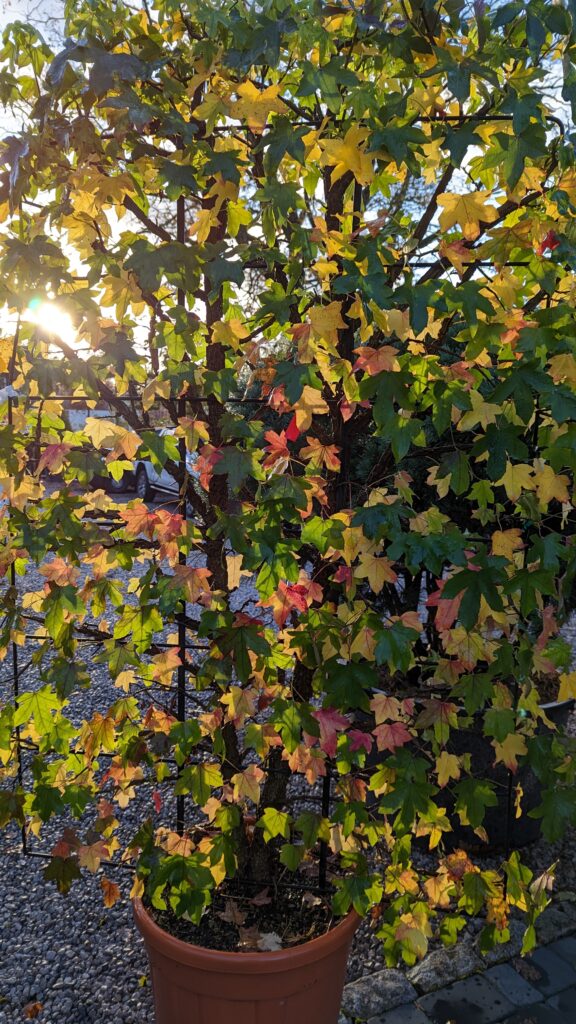
A high hedge on tall stems. The pleached form is a flat, wide frame of growth on top of a tall slim trunk. This is often used as a screen above a hedge or a wall to block out unwanted views, or onlookers. These come in a wide variety of options from evergreen Photinia, Laurel and Holly, to deciduous Beech, Hornbeam and Liquidambar, to name just a few.
Espalier
A form often used to train fruit trees against a wall. This is also a good tree shape, when trained on a frame to use as screening. It acts as a thin hedge, taking up less width than a regular hedge. Espalier frames come in a variety of sizes, so they are ideal for many different situations. Evergreen options such as trachelospurmum jasminoides (evergreen jasmine, which has a preponderance of strongly scented flowers in summer), or Photinia red robin are two great options that we stock in the nursery.
Multi stem
On the less formal side we offer multi stem trees, that flare out from the base with multiple trunks, creating a soft silhouette that is great for lower screening or a softer overall look. These trees tend to grow slightly on the smaller side as they are putting their energies into more than one stem. White stem birch and hazel work well in this form.
Parachute
This tree shape does just what it says on the tin. The crown depicts the top of the parachute, and the multiple stems that splay from a single point at the base, flaring upwards to the crown are the strings of the parachute. An elegant style of tree that works well both in a formal and more informal situation.
Cloud pruned
A style predominantly used for topiary. The floating clouds of evergreen foliage hover at the end of the elegantly trained stems. With years of preparation going into the production of each cloud pruned tree, they are usually a premium specimen. Here in the nursery, we stock some really striking cloud pruned trees using pine, ilex crenata (which looks very similar to the foliage of box, but is not prone to blight or moth) and juniper.
Pompom
Similar in many ways to the cloud pruned tree, the pompom tree’s stems are cleared apart from the balls of foliage at the end. Our Acer campestre pompom tree looks light and delicate with the cleverly pruned foliage.