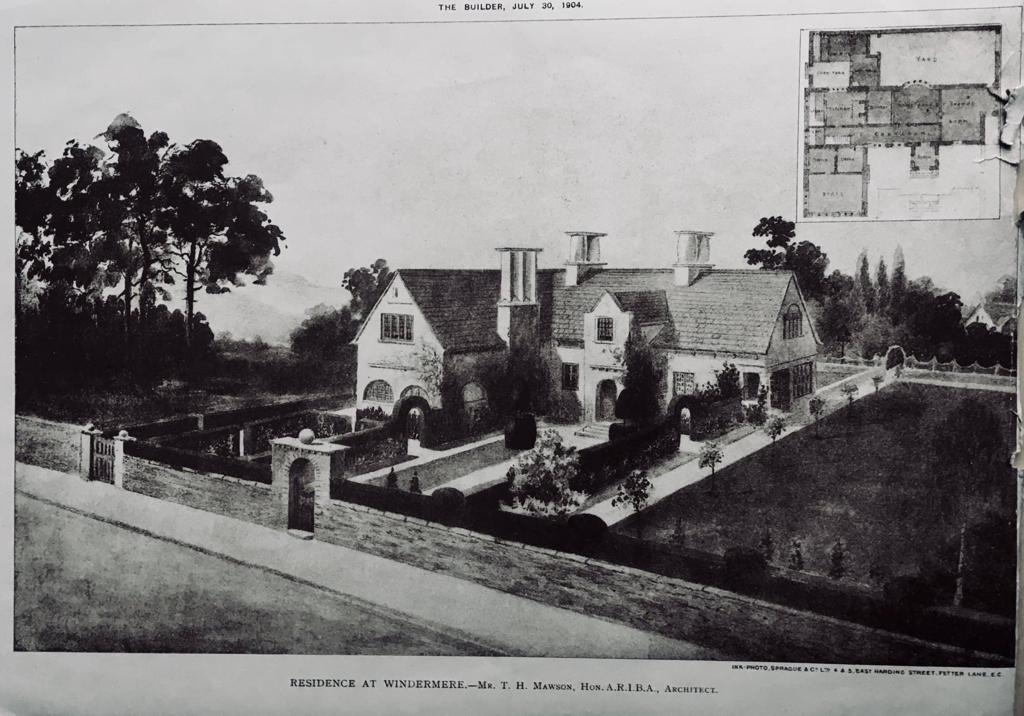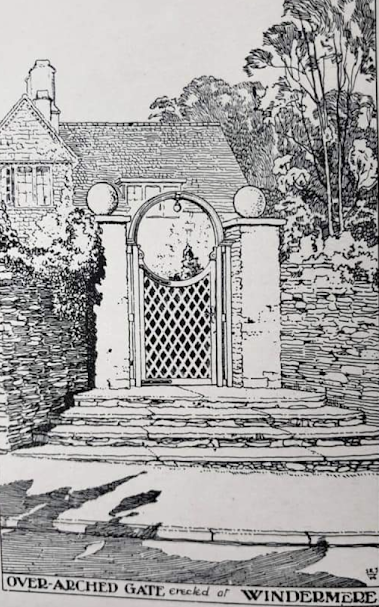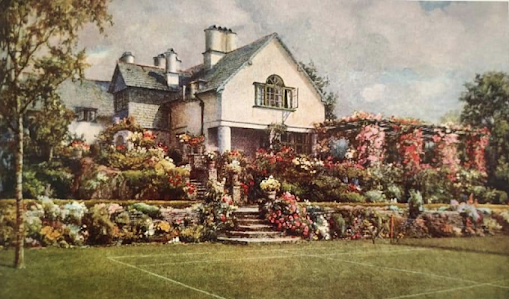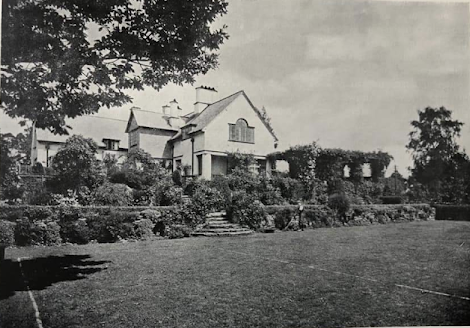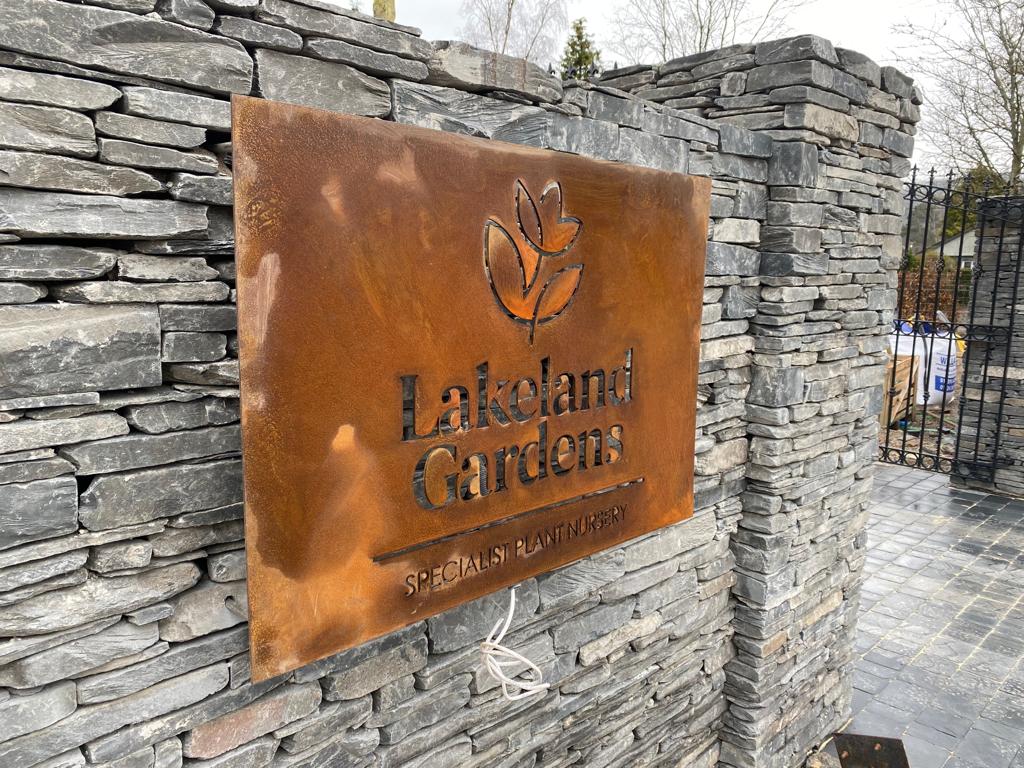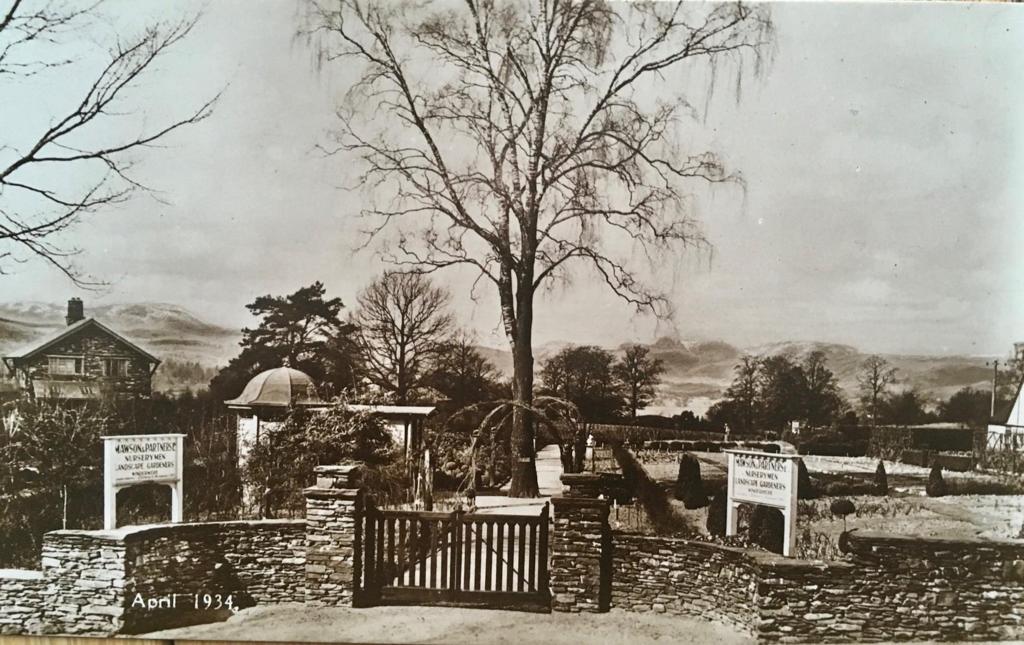

Thomas Mawson bought what is now home to Lakeland Gardens nursery and offices in 1885, a year after his honeymoon in the Lake District. Having been made redundant for the second time in five years, he had decided, along with his two brothers, to open a nursery and garden design business of his own in Windermere.
A Lancashire man, he had had to leave school at 12 in order to go out to work. He began at his uncle’s building business, tracing plans and ordering materials, until his father moved the family to Yorkshire where he built a new family home and started a fruit growing business. Thomas worked happily on the family fruit farm until his father’s death in 1877 when Thomas was just 16. He and his family were forced to give up the fruit farm after a short while, and moved to London 1879 where Thomas and his brothers all found work as nurserymen, learning about propagation and plant care.
The Lakeland Nursery soon became a thriving business, servicing the many wealthy industrialists who were building homes in the newly popular Lake District. Thomas would create designs for the gardens, and his brothers would provide the plants from the nursery. In 1889 he was commissioned to design the six acre gardens of Graythwaite Hall on the west side of Lake Windermere. This was to be his first major garden design of many in the area. Other designs include those of Langdale Chase, Holehird, Rydal Hall, Lindeth Fell, Blackwell and Brockhole to name a few.
In 1900 he published a book called ‘The Art and Craft of Garden Making’. This emphasised the importance of gardens to the general well-being of mankind, and gave insights in to his design theories. His approach was one of formality close to the house that gradually flowed out into a more natural style that linked with the landscape beyond. In the same way that ‘Capability’ Brown had worked with the entire landscape, Mawson also used the landscape beyond the garden to influence his designs, but he also looked to the house itself and its connection to the garden. Closer to the house he used formal terraces and separate ‘rooms’, which then gradually spread out to a slightly more naturalistic feeling. Here he would build waterfalls, ornamental lakes and rockeries that began to blend with the wild nature beyond the boundary of the garden. His use of trees to form vignettes of the landscape beyond is noticeably deployed at Brockhole on Windermere, where the Langdale Pikes are perfectly framed when viewed from the parterre terrace next to the house.
Then in 1908 he won a competition to design a garden for the ‘Palace of Peace’ in the Hague. His other international work included the planning of the Smoky Mountains National Park, as well as being commissioned to design the gardens for the Greek Royal Palaces. A local Windermere resident recalls his father, Ernest Coward, working for Thomas Mawson from 1918 to 1936, working on projects as far afield as Canada, the USA and Europe.
Over the years Thomas Mawson took on many garden designs, as well as park designs and the development of town plans. In 1918, after the death of his son James in the First World War, Thomas conceived the idea of a purpose built village to home service men who had been severely disabled by injuries incurred during the war. The Westfield Memorial Village was to have homes, workshops, allotments and recreation facilities, and green space was to be at its heart. Mawson was a great proponent of the benefits of gardens and green space to the mental health of the population, and he believed that exposure to nature would be essential to restoring the equilibrium of the servicemen whose lives and bodies had been shattered by the war.
Mawson developed Parkinson’s disease in the early 1920s and after a few years became too infirm to continue the running of the business, which was taken over by his eldest son, Edward. Thomas Mawson died in 1933 and is buried in Bowness churchyard.
The Mawson’s Lakeland Nursery continued to thrive on the same site in Windermere, handed down through the generations, until 1978 when it finally changed hands. The home of the Mawson family, on the opposite side of the road from the nursery, which had over the years become the payment kiosk and a large café and restaurant, also changed hands, with the beautiful family garden giving way to a hardcore car park. The garden centre that took the Mawson’s place closed in the 1980s, the site then being used as a depot for plant storage by the local council, and car storage for Rayrigg Motors from the early 1990s.
And then in 2020, when the site became available, Sam Westcott, owner of Lakeland Gardens, took the opportunity to restore the neglected and downtrodden nursery, brining life and a thriving garden business back to the place where Thomas Mawson had begun his hugely successful and fulfilling business venture 135 years earlier.